 Luxury Phinisi Editorial Desk
Updated: July 2026
Yes, you can run a full workweek from a phinisi charter in Indonesia: a Starlink-equipped phinisi typically delivers fast, stable internet at anchor — enough for video calls, cloud tools, and large file uploads across Komodo and Raja Ampat. Full-boat rates start at $3,500 per night all-inclusive, and Indonesia’s time zone overlaps working hours for both US and EU teams.
Remote work changed the question travelers ask us. It used to be “how do we disconnect?” Now it is “can we stay connected while we sail?” The honest answer, in 2027, is yes — with planning. This guide covers connectivity by route, the daily rhythm that makes a workcation actually work, and what an ocean office costs compared to a month in a villa.
Teams that want the whole boat — meeting space, Starlink, and private cabins — should look at a corporate phinisi charter.
Can You Really Work From a Sailing Ship?
A phinisi is a traditional Indonesian sailing vessel, built by hand in Bira and Tana Beru, South Sulawesi — a boat-building craft recognized by UNESCO in 2017. The hull may be ironwood and teak shaped by Konjo shipwrights, but the systems on a modern charter phinisi are current: satellite navigation, generator or hybrid power around the clock, air-conditioned cabins, and increasingly, Starlink.
That last item is the difference-maker. Cellular coverage in Indonesia’s best cruising grounds is patchy at best, and older VSAT systems were too slow and too expensive for real work. Starlink changed the equation: latency low enough for video meetings, bandwidth high enough for screen shares, uploads, and cloud development work. Luxury Phinisi, an Indonesian yacht operator trusted by U.S. travelers since 2018, now treats working connectivity as a standard pre-charter question, not an exotic request. If your charter depends on being online, say so early — we confirm the specific vessel’s setup before you commit.
Connectivity Reality Check by Route
Not all Indonesian waters are equal for remote work. Here is the honest picture, route by route:
| Route | Cellular (4G/5G) | Starlink | Workcation verdict |
|---|---|---|---|
| Bali & Nusa Penida | Good near coastlines | Strong | Easiest — dual coverage most days |
| Komodo National Park | Reliable near Labuan Bajo, patchy inside the park | Strong at anchor | Excellent with Starlink aboard |
| Raja Ampat | Minimal outside Waisai and Sorong | Workable, weather-dependent | Possible, but build in buffer time |
Two practical notes. First, Starlink performs best at anchor; under way in heavy swell, expect brief dropouts, so schedule critical calls for anchorage hours. Second, satellite internet degrades in intense tropical squalls — usually a matter of minutes, but worth knowing before you promise a board presentation at a fixed time. For antenna placement, backup options, and how to test the connection on day one, read our detailed phinisi WiFi and Starlink guide.
The Ideal Work-Sail Itinerary: Mornings Online, Afternoons Ashore
The workcation charters that succeed follow a rhythm. The crew adapts the sailing plan to your meeting calendar rather than the other way around:
- 06:00–08:00 — Sunrise, coffee on deck, early calls with US West Coast colleagues finishing their afternoon.
- 08:00–13:00 — Deep work block at anchor. The boat stays put; the connection stays stable.
- 13:00–17:00 — The reward: snorkeling, island hikes, manta watching, or a short repositioning sail to the next anchorage.
- 17:00–21:00 — Dinner, then the EU-overlap window: 5 PM in Komodo is late morning in Berlin and Paris.
Over seven nights in Komodo, this rhythm still covers the highlights — Padar’s ridgeline, the dragons at Rinca or Komodo Island, Pink Beach, and the manta cleaning stations — because most crossings between anchorages take one to three hours and can slot into lunch breaks. Shorter trial run? A three-night circuit from Bali around Nusa Penida keeps you in strong dual coverage the entire time; see our Bali phinisi charter options for boats positioned there year-round.
Cabins and Decks That Double as Offices
A phinisi gives you more usable workspace than almost any villa of comparable nightly cost, because the spaces multitask:
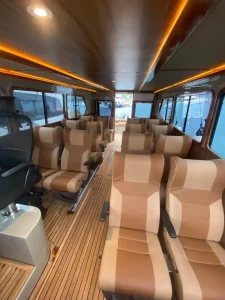
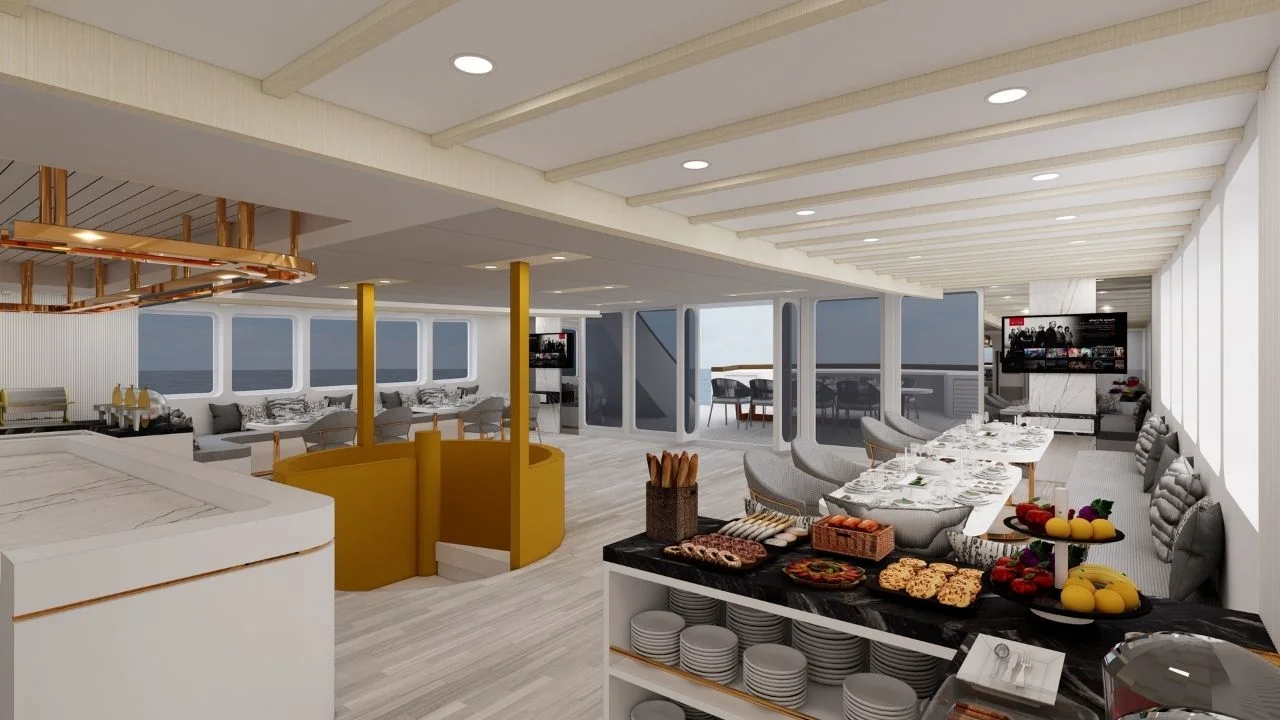
- Air-conditioned salon — the default meeting room: large table, power outlets, out of the wind and glare.
- Master cabin desks — most 25m+ vessels have at least one cabin with a proper writing desk for private calls.
- Shaded aft deck — the standing-desk alternative; the classic “working from a boat” video background, with real ventilation.
- Foredeck cushions — for reading, async work, and thinking time between meetings.
Practicalities matter more than aesthetics here. Confirm outlet types (Indonesia uses 230V, European two-pin plugs), ask whether the generator runs 24 hours or on a schedule, and bring a laptop glare hood if you intend to work outside. Noise-canceling earbuds handle the rest — a generator hum is quieter than most co-working spaces.
Time Zones: Why Indonesia Works for US and EU Teams
Komodo and Bali sit on Central Indonesia Time (UTC+8). That position is unusually kind to distributed teams:
- US East Coast: 8–9 PM aboard is 8–9 AM in New York. Evening calls after dinner catch your team’s morning standup.
- US West Coast: 7 AM aboard is 4 PM the previous day in San Francisco — a natural sunrise-call window.
- Europe: 3–9 PM aboard covers 8 AM–2 PM in Central Europe. You can sail all morning and still attend every meeting that matters.
The pattern most solo workcationers settle into: guard the morning for deep work when the boat is quiet, take the afternoon off the clock entirely, and stack synchronous meetings into the evening. You end the day having done a full day’s work, watched mantas, and eaten grilled fish under the stars. Raja Ampat runs one hour ahead (UTC+9), which shifts every window later by an hour — slightly better for Europe, slightly harder for the US West Coast.
Team Offsites vs Solo Workcations
Two different products, one platform. A solo or couple workcation suits a one- or two-cabin booking on a shared departure, or a small entry-tier boat taken whole from $3,500 per night. You keep your normal job running and add the ocean around it.
A team offsite flips the ratio: the boat becomes the meeting venue. A phinisi is a genuinely good one — no hotel-lobby distractions, no one slipping away early, and a forced-proximity effect that produces the conversations offsites are meant to produce. Teams of 6–14 fit premium and ultra-tier vessels (25–50m) with enough salon space for full-group sessions and enough deck for breakouts. Charters can carry a working agenda for two or three days, then release everyone into pure expedition mode for the rest of the week. If that is the shape of your trip, our corporate phinisi charter page covers formats, group pricing, and how invoicing works for company-paid bookings.
What It Costs vs a Month in a Villa
Charter pricing is per night for the entire boat, all-inclusive — crew, chef, meals, fuel within the route, and activities. Split across a full boat, the math is more reasonable than most people expect:
| Tier | Vessel / guests | Per night (full boat) | Per person, 8 sharing |
|---|---|---|---|
| Entry | 20–25m, 4–8 guests | $3,500–5,500 | From roughly $440 |
| Premium | 25–35m, 6–12 guests | $5,500–12,000 | From roughly $690 |
| Ultra | 35–50m, 8–14 guests | $12,000–20,000 | From roughly $1,500 |
Compare that to the standard digital-nomad benchmark: a staffed luxury villa in Bali. A high-end villa often looks cheaper per night, but the villa price rarely includes three chef-prepared meals a day, a private crew, daily excursions, and transport — on a charter, all of that is inside the number. A seven-night entry-tier charter for a group of eight lands near what many teams spend on a conventional resort offsite, and nobody comes home with a story about the hotel conference room. Komodo departures start from $3,500 per night; Raja Ampat, being far more remote, starts from $5,500 per night.
Frequently Asked Questions
Is the internet on a phinisi fast enough for video calls?
On a Starlink-equipped vessel at anchor, yes — video meetings, screen sharing, and cloud work all run comfortably. Speeds dip briefly during heavy squalls or fast passages, so schedule critical calls for anchorage hours and confirm the specific boat’s setup before booking.
Which route is best for a working charter?
Komodo is the sweet spot: strong Starlink performance, cellular backup near Labuan Bajo, short hops between anchorages, and afternoons ashore that justify the flight on their own. Bali and Nusa Penida are even easier for a short trial. Raja Ampat works, but build buffer time into your calendar.
Can I charge a workcation charter to my company?
Yes. Team offsites are routinely company-paid, and we issue proper invoices for corporate bookings. Many teams structure the week as two or three working days plus expedition days — details are on our corporate charter page.
How do I confirm a boat is work-ready before paying?
Ask three questions: Is Starlink installed and included? Does the generator run 24 hours? Is there an air-conditioned indoor workspace? Message Luxury Phinisi on WhatsApp at +62 811 382 3875 and we will match you to a vessel that passes all three.