 Luxury Phinisi Editorial Desk
Updated: July 2026
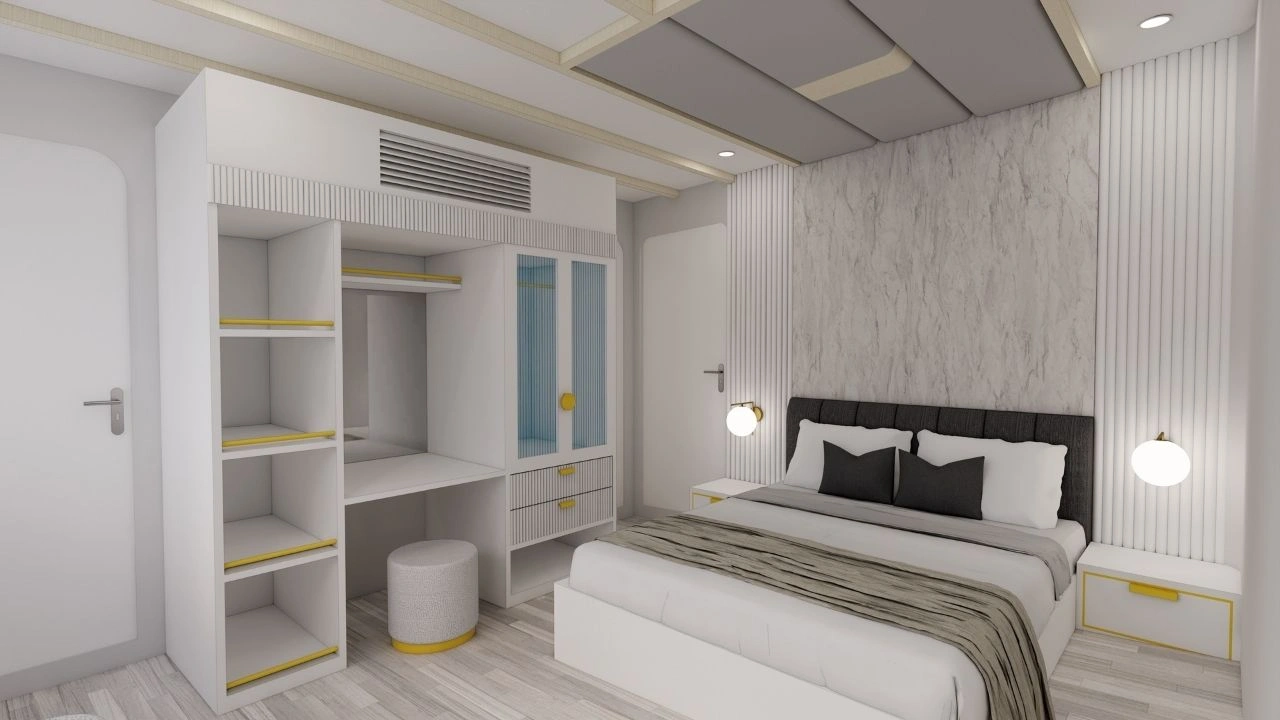
Phinisi cabins fall into three practical categories: master suites (full-beam, king bed, panoramic windows), ocean-view cabins on the main or upper deck, and lower-deck cabins with portholes or bunks. Most luxury phinisi yachts carry 3 to 8 en-suite, air-conditioned cabins, with the master suite occupying the best position on board. Vessel size decides the count.
This guide explains what separates each cabin type, how many cabins to expect at every vessel size, and how to match layouts to couples, families, and larger groups. It reflects what Luxury Phinisi sees across the 40-plus vessels we charter and manage in Indonesia, and the cabins our team inspects before any yacht joins our fleet.
Cabin Categories Explained
A phinisi is not a floating hotel corridor. These are traditional two-masted hulls, built by Konjo shipwrights in Bira and Tana Beru, South Sulawesi — a boat-building craft UNESCO inscribed in 2017. The hull shape that gives a phinisi its character also dictates where cabins can sit: wide and stable amidships, tapering toward bow and stern. Ironwood (ulin) below the waterline and teak throughout the interior are the standard materials on well-built vessels.
Within that hull, cabins sort into three types:
- Master suite — the largest cabin on board, usually full-beam, with a king bed and the biggest bathroom. Larger yachts carry two or more.
- Ocean-view cabins — main-deck or upper-deck cabins with large windows and, on some vessels, direct deck access.
- Lower-deck cabins — below the main deck, lit by portholes, configured as doubles, twins, or bunks.
Some vessels add a convertible cabin — a twin that becomes a double, or a bunk room sized for children — which matters more than most guests expect when a group has an odd headcount.
The Master Suite: What Sets It Apart
The master suite is defined by position and volume, not just a bigger bed. On most phinisi it spans the full beam of the vessel — often 4 to 6 meters of width — placed aft on the main deck or on the upper deck, away from the engine room. Expect a fixed king bed, wraparound or panoramic windows, a sofa or writing desk, and the largest en-suite bathroom on board, frequently with a rain shower and double vanity on Ultra-class yachts. A handful of flagship vessels attach a private terrace or direct access to a reserved deck area.
Two practical notes. First, the master suite is the quietest cabin at anchor and under way, because it sits farthest from generators and engine. Second, on a private charter the master is yours to assign — honeymooners take it by default, but in a multi-couple group it is worth deciding before boarding rather than on the gangway. Our comparison of the best luxury phinisi yachts for 2027 flags which vessels carry more than one master, which dissolves that negotiation entirely.
Ocean-View vs Lower-Deck Cabins
The real decision for most guests is between ocean-view and lower-deck cabins, and each has a legitimate case.
Ocean-view cabins sit on the main or upper deck. You get natural light through proper windows, a horizon line from bed, and short steps to the outdoor lounges. The trade-off: they sit higher above the waterline, so they register slightly more movement in a swell, and cabins opening onto shared decks carry more foot-traffic noise at sunrise.
Lower-deck cabins are the sleeper pick — literally. Positioned near the waterline and closer to the vessel’s center of gravity, they move less in open water, which makes them the sensible choice for anyone prone to seasickness. Light comes through portholes rather than windows, and cabins adjacent to the engine room will carry a low hum during passages. On a well-maintained luxury phinisi that hum is modest; on a budget boat it is not, which is one reason we vet engine-room insulation before listing any vessel.
Rule of thumb: light-and-view people go up, motion-sensitive people go down and midship.
En-Suite Bathrooms, AC and Storage
On a luxury phinisi with en-suite cabins, every stateroom should include:
- A private bathroom with hot-water shower — rain showers are standard from the Premium tier upward
- Individually controlled air conditioning, not a single shared zone
- Wardrobe hanging space plus under-bed storage sized for soft luggage
- Universal power outlets and reading lights at each berth
- Fresh linen changes and daily housekeeping
Modern vessels run watermakers (desalination) so showers are not rationed on longer routes, and the yachts we represent pair heritage teak interiors with current safety and navigation systems plus Starlink connectivity — so a lower-deck cabin still holds a video call from the middle of the Flores Sea. Shared-bathroom layouts still exist on older or budget boats; if a listing does not say “en-suite,” ask before you book.
How Many Cabins Does a Phinisi Have?
Between 2 and 8, driven almost entirely by hull length. Here is how cabin count tracks vessel size across the market, with our all-inclusive full-boat rates per night:
| Vessel size | Guests | Typical cabins | Typical mix | Full-boat rate / night |
|---|---|---|---|---|
| 20–25 m (Entry) | 4–8 | 2–4 | 1 master + doubles or bunks | $3,500–5,500 |
| 25–35 m (Premium) | 6–12 | 3–6 | 1 master + ocean-view + lower-deck | $5,500–12,000 |
| 35–50 m (Ultra) | 8–14 | 4–7 | 1–2 masters + ocean-view suites | $12,000–20,000 |
| 50–65 m (Flagship) | 12–16 | 6–8 | Suite-grade cabins throughout | $20,000–35,000 |
Rates are all-inclusive per night for the whole vessel. Komodo charters start from $3,500 per night; Raja Ampat starts from $5,500 per night because of its remoteness. Divide the full-boat rate by your headcount and a Premium phinisi often lands near the cost of a beach-resort suite — with the anchorage changing daily.
Choosing Cabins for Families and Groups
Cabin math is the first thing to settle, before dates and even before destination.
Families: look for a layout with one master plus a twin or bunk cabin close by. Children generally sleep better in lower-deck cabins — darker, more stable — and bunk rooms keep siblings together without sacrificing an adult double. A 4-cabin Entry or Premium vessel suits two families of four cleanly.
Couples’ groups: count your couples and match them to real doubles, not convertibles. Three couples want three genuine double cabins of comparable quality, or someone feels short-changed; vessels with multiple ocean-view doubles handle this better than boats with one standout master and modest everything else.
Mixed or larger groups: from 10 guests upward, move to Ultra-class. Two master suites plus a run of matched doubles removes the hierarchy problem, and the extra deck space matters more than the cabins themselves over a week on board.
If your group cannot fill a whole boat, shared departures exist — we break down the trade-offs in cabin charter vs private phinisi. For exclusive use of the vessel, cabin assignment, and a fully private itinerary, a private phinisi yacht charter is the format the numbers usually favor for groups of six or more.
Cabin Layouts Across Our Three Collections
We organize our fleet into three collections, and cabin layout is a core part of how a vessel qualifies for each.
Signature Collection
Our Ultra and Flagship vessels, 35 to 65 meters. Expect 4 to 8 cabins, at least one true full-beam master, and en-suite bathrooms that rival boutique-hotel standards — double vanities, rain showers, proper wardrobes. Several carry two masters, which is why Signature yachts dominate multi-couple and multigenerational bookings. Rates run $12,000–35,000 per night, all-inclusive.
Voyager Collection
Premium vessels of 25 to 35 meters with 3 to 6 cabins — the workhorse layout of Indonesian chartering: one master, one or two ocean-view doubles, and lower-deck twins or bunks. This is the sweet spot for families and groups of 6 to 12, at $5,500–12,000 per night.
Hideaway Collection
One-to-three-cabin boats built around privacy rather than capacity. With so few guests aboard, every cabin gets master-grade attention, and the whole vessel functions as a private retreat for a couple or small family. Hideaway charters begin at $3,500 per night.
Since 2018, U.S. travelers have trusted our team to match cabin layouts to real group dynamics — it is the single most common thing we adjust after a first inquiry. Send us your headcount and cabin preferences on WhatsApp at +62 811 382 3875 and we will shortlist vessels whose layouts actually fit.
Frequently Asked Questions
How many cabins does a phinisi boat have?
Between 2 and 8, depending on length. Entry vessels of 20–25 meters carry 2–4 cabins, Premium yachts of 25–35 meters carry 3–6, and Ultra to Flagship vessels of 35–65 meters carry 4–8, often including two master suites.
Do all phinisi cabins have private bathrooms?
On luxury vessels, yes — every cabin we list is en-suite with a hot-water shower and individually controlled air conditioning. Shared bathrooms still appear on older budget boats, so confirm “en-suite” explicitly before booking anything outside a vetted fleet.
Which cabin is best if I get seasick?
A lower-deck cabin positioned midship. It sits closest to the waterline and the vessel’s center of gravity, so it moves least in a swell. Upper-deck ocean-view cabins feel more motion because they sit higher above the water.
Is the master suite worth the upgrade on a private charter?
On a private charter the master is included in the full-boat rate, so there is no upgrade fee — only the question of who sleeps in it. It is the largest, quietest cabin on board, which makes it the natural pick for the lead couple or the trip’s organizers.