 Luxury Phinisi Editorial Desk
Updated: July 2026
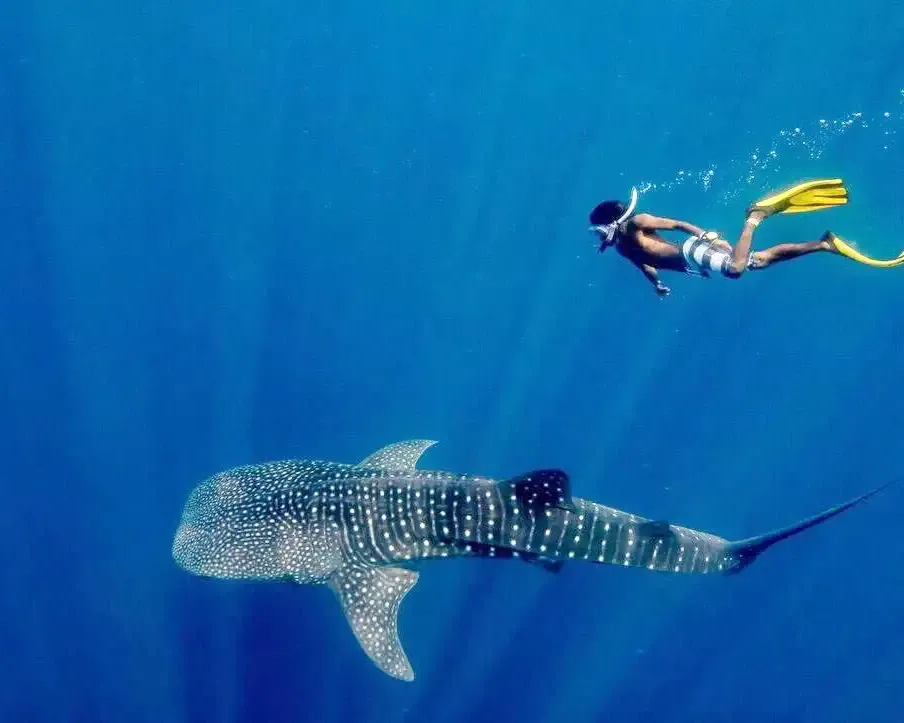
You can swim with whale sharks in Indonesia in four dependable regions: Cenderawasih Bay and Triton Bay in West Papua, Saleh Bay off Sumbawa, and Gorontalo in northern Sulawesi. The most reliable encounters happen around bagan fishing platforms in Cenderawasih Bay, where whale sharks feed year-round and a private phinisi charter puts you in the water at first light, before any day boats arrive.
Swimming beside a twelve-meter filter feeder is the single most requested experience on our charter calendar, and for good reason: Indonesia is one of the only countries on earth where whale shark encounters are predictable rather than lucky. This guide covers all four aggregation sites, the season for each, the ethics that keep these animals returning, and which route makes sense for your group and budget.
Where Whale Sharks Gather: The Four Bays
Whale sharks (Rhincodon typus) are the largest fish in the sea and have been listed as Endangered on the IUCN Red List since 2016. In most of the world, seeing one is a matter of chance. In Indonesia, four bays concentrate them with unusual consistency:
- Cenderawasih Bay, West Papua — year-round residents feeding beneath bagan platforms; the most reliable site in the country.
- Triton Bay, Kaimana, West Papua — bagan encounters plus some of Indonesia’s richest soft-coral reefs and an endemic walking shark.
- Saleh Bay, Sumbawa — morning encounters an overnight sail from Komodo National Park, making it the easiest add-on in the archipelago.
- Gorontalo, northern Sulawesi — intermittent nearshore appearances at Botubarani; rewarding when the sharks are in, but never guaranteed.
The common thread in three of the four is the bagan: a wooden lift-net fishing platform that anchors offshore and attracts schools of silverside baitfish under its lights. Whale sharks learned generations ago that bagans mean easy calories, and local fishermen — who consider the animals good luck — tolerate and often welcome them. That relationship is why the encounters are dependable, and why a liveaboard that can anchor near the platforms overnight has such an advantage over any land-based operation.
Cenderawasih Bay: The Bagan Phenomenon
Cenderawasih Bay is Indonesia’s largest marine national park, a vast, sheltered gulf on the northern coast of West Papua. The whale shark aggregation centers on the bagans off Kwatisore, near Nabire, where sharks visit the platforms so regularly that multi-animal encounters are the norm rather than the exception. It is common to have three to six sharks circling a single bagan at dawn, gliding up to the nets and gulping at the surface.
What makes Cenderawasih singular is the calendar: the sharks are present year-round. There is no season to miss. The bay’s isolation — it sits off the main liveaboard circuits — means the animals face little pressure, and on a private charter you will often have a bagan entirely to yourselves. Crossings into the bay are calmest from roughly May through October, which is why most itineraries run in that window even though the sharks never leave.
The encounters themselves are snorkel-first: sharks feed at the surface, so mask and fins deliver the best viewing, though divers can drop a few meters below the platform and watch the animals pass overhead in silhouette. A dedicated Cenderawasih Bay phinisi charter typically runs 7 to 10 nights, combining the Kwatisore bagans with the bay’s other claim to fame — WWII wrecks and reefs that have developed in near-total isolation from the rest of the Coral Triangle.
Triton Bay: Sharks Plus Walking Sharks
Triton Bay, in the Kaimana regency of West Papua, is the connoisseur’s choice. Whale sharks aggregate around bagans here too, usually within a short tender ride of the anchorage, and the encounters follow the same rhythm: arrive before sunrise, check the platforms, slip into the water while the sharks feed. Reliability is high in season, though a notch below Cenderawasih.
What Triton adds is everything around the whale sharks. The bay’s nutrient-rich water feeds soft-coral gardens and black-coral forests that many experienced divers rate among the finest in Indonesia. It is also home to Hemiscyllium henryi — the Triton Bay walking shark, an epaulette species described by science in 2008 and found nowhere else on earth. Night snorkels and dives in the shallows regularly turn one up, “walking” across the reef on its pectoral fins. Very few places let you log the largest shark in the ocean and one of its smallest, most localized relatives in the same day.
The charter season runs roughly October through April, when seas in the Kaimana region lie down. Triton pairs naturally with Raja Ampat on crossing itineraries, and because the region is remote, boats here book at the Premium tier and above. See the Triton Bay phinisi charter page for routing and vessel options.
Saleh Bay, Sumbawa: The Komodo Add-On
Saleh Bay is the practical answer for travelers who want whale sharks without committing to a West Papua expedition. The bay cuts deep into Sumbawa’s north coast, an overnight sail west of Komodo National Park’s western entrance, and its bagan fleet hosts whale sharks with strong year-round consistency. Encounters happen in the early morning — the tender leaves the phinisi in the dark, and by the time the sun clears the ridgeline you are floating beside feeding sharks in calm, protected water.
Because the logistics are so simple, Saleh Bay works as a two-night extension on almost any Komodo itinerary: sail the park’s manta sites and pink beaches first, then push west for the sharks before returning to Labuan Bajo. For groups short on time, it is the highest-probability whale shark encounter per day of travel anywhere in Indonesia. Komodo charters that include the Saleh Bay extension start from $3,500 per night for a full-boat, all-inclusive booking on our entry-tier hulls.
One honest caveat: Saleh Bay is not a diving destination in its own right. The visibility inside the bay is variable and the encounters are snorkel-based. If your group wants serious reef diving with its whale sharks, West Papua is the better route — our phinisi diving charter page breaks down which itineraries carry full dive crews, compressors, and nitrox.
Gorontalo: The Wild Card
Gorontalo, on the southern shore of northern Sulawesi facing Tomini Bay, is the outlier on this list. Whale sharks appear directly off the village of Botubarani, sometimes just a few dozen meters from shore — an association widely linked to discards from local shrimp processing. When the animals are in residence, the swimming is as easy as it gets. The catch is the word “when”: appearances are intermittent, with stretches of weeks when sharks are present daily followed by absences of equal length. No responsible operator will promise an encounter here.
For charter purposes, treat Gorontalo as an opportunistic stop on a Tomini Bay or Togean Islands route rather than the reason to book one. If recent sighting reports are positive when your itinerary passes through, it is a worthwhile detour; if not, the Togeans’ reefs justify the route on their own. We track sighting patterns across all four regions and will tell you plainly what the odds look like for your dates.
Whale Shark Season in Indonesia: Table and Ethics
Here is the whale shark season picture across all four sites at a glance:
| Location | Best window | Reliability | Pairs with |
|---|---|---|---|
| Cenderawasih Bay | Year-round (calmest seas May–Oct) | Very high | Dedicated West Papua route |
| Triton Bay | October–April | High | Raja Ampat crossings |
| Saleh Bay | Year-round, early mornings | High | Komodo National Park |
| Gorontalo | No fixed season; intermittent | Low–moderate | Togean Islands / Tomini Bay |
Ethics of the encounter
Whale sharks are endangered, and the privilege of swimming with them comes with rules our crews enforce without exception:
- No touching, ever. Contact removes the protective mucus layer on the shark’s skin and habituates animals to handling.
- Keep your distance. Stay at least three meters from the body and four from the tail — a feeding shark can swing its caudal fin faster than you can react.
- Never block the animal’s path or position yourself over its head while it feeds at the surface.
- No flash photography, and small groups in the water at a time. On a private charter this is easy to manage; it is one more argument against crowded day-boat operations.
- Respect the bagan crews. The platforms are working fisheries. Our captains arrange access and compensation directly with the fishermen, which keeps the relationship sustainable for everyone.
Which Route Fits Your Charter
The decision usually comes down to time, budget, and how central the sharks are to your trip:
- Whale sharks are the whole point: Cenderawasih Bay. Maximum reliability, multiple animals, no season constraints, complete solitude.
- Sharks plus Indonesia’s best reefs: Triton Bay, October through April, ideally combined with Raja Ampat.
- Sharks on a Komodo timeline: Saleh Bay as a two-night extension — the efficient choice for first-time Indonesia charters.
- Already routing through Sulawesi: ask us about current Gorontalo sightings before locking the itinerary.
On pricing, our full-boat, all-inclusive rates run per night by vessel class: Entry hulls (20–25m, 4–8 guests) from $3,500 to $5,500; Premium (25–35m, 6–12 guests) $5,500 to $12,000; Ultra (35–50m, 8–14 guests) $12,000 to $20,000; and Flagship yachts (50–65m, 12–16 guests) $20,000 to $35,000. Komodo-based routes start from $3,500 per night, while remote West Papua routes start from $5,500 per night. Every Luxury Phinisi vessel is a traditionally built hull from the boatyards of Bira and Tana Beru in South Sulawesi — the Konjo shipwright craft UNESCO inscribed in 2017 — refitted with modern navigation, safety systems, and Starlink, so an expedition into Cenderawasih Bay never means going dark.
Getting there is simpler than the map suggests: domestic connections reach Nabire, Kaimana, and Labuan Bajo daily, and our crews handle every transfer from the arrivals hall to the tender. Our airport-to-phinisi logistics guide walks through the flight connections for each departure port. We have arranged these routes for U.S. travelers since 2018; message us on WhatsApp at +62 811 382 3875 with your dates and group size, and we will match the bay, the season, and the boat.
Frequently Asked Questions
Is it safe to swim with whale sharks?
Yes. Whale sharks are filter feeders with no interest in humans, and there is no record of aggressive behavior toward swimmers. The main risk is an accidental tail strike in close quarters, which is exactly why guides enforce the three-to-four-meter distance rule and keep group sizes small.
What is the best time of year to see whale sharks in Indonesia?
Cenderawasih Bay and Saleh Bay host whale sharks year-round, so any month works for those routes. Triton Bay’s charter season runs October through April. Gorontalo has no reliable season — appearances are intermittent and should be treated as a bonus, not a plan.
Do I need to be a certified diver for these encounters?
No. Whale sharks at the bagans feed at the surface, so snorkeling actually gives the best view, and confident swimmers of any experience level can join. Divers get an added perspective from below the platforms, and on West Papua routes the surrounding reef diving is a major part of the itinerary.
How many whale sharks will we actually see?
At Cenderawasih Bay, three to six sharks around a single bagan is typical, and encounters can last hours. Triton and Saleh Bay usually deliver one to four animals per morning. No wild-animal encounter is guaranteed, but these are the most consistent aggregation sites in Indonesia — and we schedule multiple bagan mornings into every itinerary to stack the odds.