 Luxury Phinisi Editorial Desk
Updated: August 2026
Every custom phinisi itinerary we run is built from five inputs — your dates, your group, your priorities, the season, and the passage math — in that order. There is no fixed route sold off a shelf: the published itineraries on this site are starting skeletons, and every departure gets redrawn around the people on board. This guide shows the actual design process our charter desk has refined since 2015, so you know what to bring to the first conversation and what happens after it.
The Five Inputs, In Order
1. Dates — because season picks the region first
Indonesia’s charter map flips with the monsoon. Komodo sails best roughly April–November; Raja Ampat runs October–April; frontier routes like Sumba need the May–October dry season. Your dates therefore choose the region before taste does — and when guests come with fixed dream-destination and fixed dates that clash, we say so at message one rather than after a deposit.
2. Group — cabins are arithmetic, not adjectives
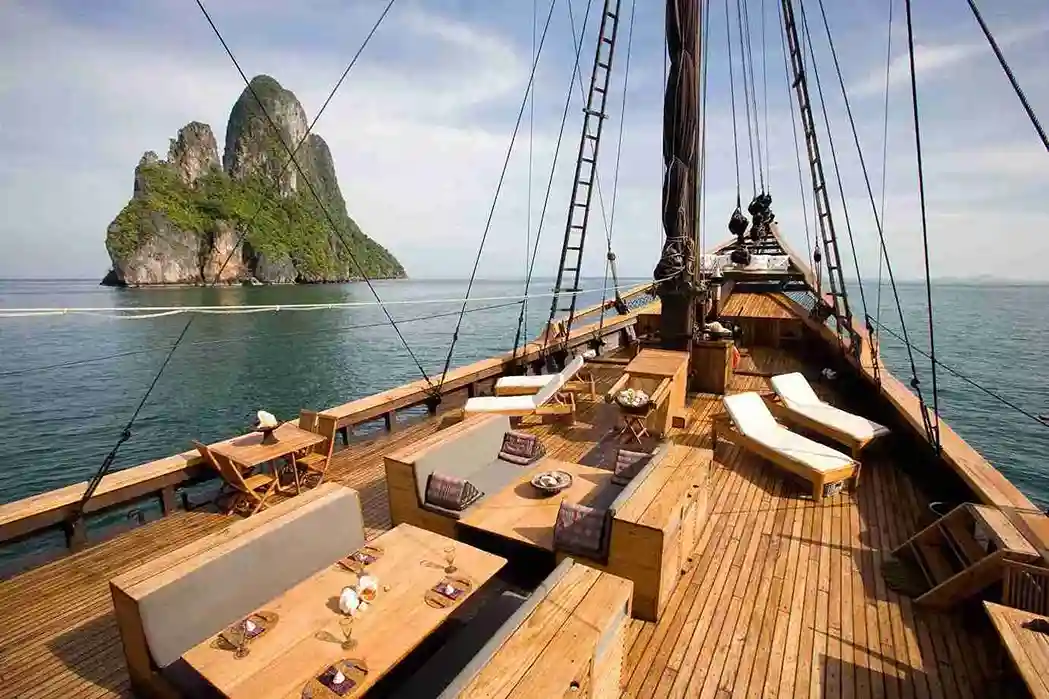
Five adults who need three cabins, a honeymoon that needs one perfect one, eight divers who need a camera table and nitrox: the group’s shape shortlists the vessel, and the vessel constrains the route (bigger hulls carry more range and tender capacity; smaller ones fit intimate anchorages). This is where deck plans beat brochures every time.
3. Priorities — we ask for the one non-negotiable
Mantas. A wedding blessing on a specific beach. Surf. A child’s first snorkel. One priority anchors the route; three priorities force trade-offs we will show you honestly. Everything else becomes “if conditions allow” — and conditions usually allow more than they forbid.
4. Season detail — inside the region, timing tunes the sites
Within Raja Ampat’s October–April window, manta traffic peaks December–March; April favours Misool’s warm, clear water. Within Komodo’s season, July–August brings crowds to headline sites — which our crews dodge by inverting the standard clock, walking Padar at dawn and diving the marquee reefs while the day fleet is at lunch.
5. Passage math — the honest constraint
A phinisi makes 6–9 knots. That single number shapes everything: Wayag is an overnight north of the Dampier Strait, Misool an overnight south, Sumba an overnight from Komodo. Good design spends those hours while you sleep and refuses routes that turn holidays into deliveries. If a route needs more nights than you have, we cut a region — not the sleep.
Worked Example: Ten Nights, Divers and a Photographer
A recent brief: eight guests, ten nights in February, half of them divers, one shooting landscape. February puts us in Raja Ampat at manta peak. The skeleton became: Sorong boarding, three days in the Dampier Strait (divers get the current-swept marquee sites early), Piaynemo day four for the photographer, overnight to Wayag for the karst summit at dawn, then the long swing south for three days in Misool — soft-coral diving for the divers, lagoons and viewpoints for the camera — before the return crossing. Ten nights, two regions, both overnight passages spent asleep. The published 7-day Raja Ampat skeleton and Komodo 3-day itinerary show the base patterns we stretch and splice this way.
What “Custom” Includes — and What It Honestly Cannot
Included: route, anchorage sequence, menu design around diets, event staging (proposals, birthdays, blessings), dive plans split by certification, land excursions through our local contacts, and mid-charter changes when weather or whim suggests them — the crew replans daily. Not included, at any price: guaranteed wildlife, itineraries that ignore the monsoon, or anchorages the rangers close. A desk that promises those is telling you about its ethics, not its capability. For multi-week expedition shapes across several regions, see our phinisi voyage program.
The Draft You Will Actually Receive
“Custom” is an easy word to print, so here is what the deliverable looks like in practice. Within a day or two of your brief, the desk sends a route skeleton: a day-by-day table with anchorages, passage hours marked honestly, the one non-negotiable anchored on its best-odds day, and alternates listed for anything weather-dependent. Alongside it comes the vessel shortlist — usually three boats with deck plans, crew profiles and the trade-offs stated plainly (“faster tender, smaller cabins” beats adjectives). You mark up the draft like a document, because that is what it is; two or three iterations later it locks, and the crew receives it as a sailing plan, not a suggestion.
What guests consistently underestimate is how much the briefing quality shapes the voyage. Tell us a knee that dislikes steep climbs, a child who wakes at five, an anniversary you have not mentioned to your spouse — the route bends around all three, silently. The desk has staged a proposal at a Piaynemo viewpoint with the ring carried aboard in the provisioning crates, and re-sequenced an entire Komodo week because one guest’s single wish was an empty Padar summit. Neither appeared on any brochure. Both came from one honest planning call.
Frequently Asked Questions
Does a custom itinerary cost more than a standard one?
No — customisation is the product, not an upsell. You pay the vessel’s published nightly band (see pricing); the route design, however many drafts it takes, is the desk’s job. Only hard costs like park fees, long repositioning fuel or third-party events price separately, always itemised.
How far ahead should route design start?
For peak windows — July–August Komodo, December–March Raja Ampat — start 6–12 months out, because vessel choice narrows fast. The route itself can be drafted in a week; it is the right boat on the right dates that needs the runway.
Can the itinerary change mid-charter?
Yes, and it should. Weather, wildlife reports and the group’s energy all redraw days on the water; your captain and the desk adjust in real time. The plan is a living document — that is the entire advantage of a private charter over a scheduled cruise.
How do we start?
Send dates, group size and your one non-negotiable via the contact page. You will get back a season-honest first read and a skeleton route, usually within a day.