 Luxury Phinisi Editorial Desk
Updated: August 2026
Short answer: with 5 nights, stay north (Dampier Strait + Piaynemo); with 7 or more, sail both — north first for the big-fish adrenaline, then finish south in Misool’s soft-coral calm. The north is Raja Ampat’s high-energy zone: current-swept reefs with record fish counts and reliable mantas. The south is its protected sanctuary: gentler water, sculptural karst and the densest coral cover in the archipelago. They reward different priorities, and the passage between them costs a full night each way.
The Two Raja Ampats, Side by Side
| North — Dampier Strait, Piaynemo, Wayag | South — Misool Marine Reserve | |
|---|---|---|
| Character | Big fish, strong currents, drift dives | Soft corals, pinnacles, lagoons, calmer water |
| Marquee sites | Cape Kri, Blue Magic, Sardine Reef, Piaynemo, Wayag | Magic Mountain, Boo Windows, Fiabacet, Balbulol, Tomolol Cave |
| Currents | 1–4 knots at the energetic sites; reef hooks in play | Generally moderate — the “easier finish” |
| Mantas | Peak roughly December – March at Blue Magic | January – March at Magic Mountain |
| Snorkellers | Good (Arborek jetty, Friwen) | Excellent — most sites work shallow |
| Access | 3–4 hours’ sail from Sorong | Overnight passage (~12 hours) from Sorong |
| Viewpoints | Piaynemo, Wayag’s Mount Pindito | Balbulol, Love Lagoon |
Choose North If…
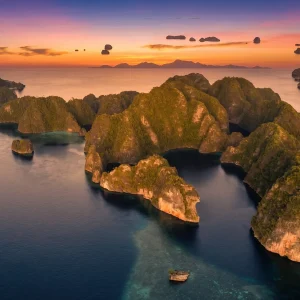
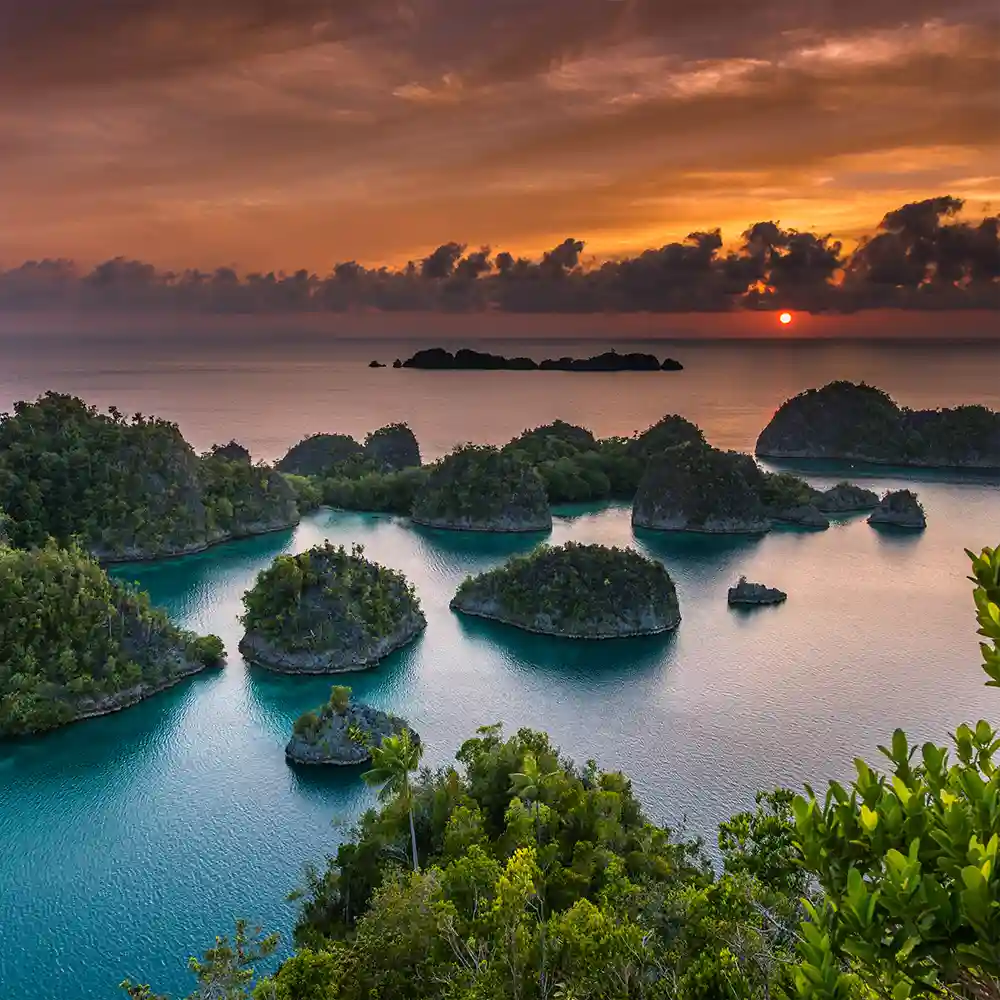
You have five nights or fewer, you dive for the pelagic action, or this is a first visit. The Dampier Strait alone justifies the flight: Cape Kri holds the world-record single-dive fish count (370+ species), Blue Magic delivers oceanic mantas from roughly October onward, and the Piaynemo viewpoint gives you the karst panorama without the long haul to Wayag. Currents are real — 2026 dive briefings describe the strait as strong-ripping at peak sites — so less-experienced divers get site choices matched to their comfort. Everything here sits within a short sail of Sorong, so a 5-night charter wastes almost nothing on passages.
Choose South If…
You have been north before, you shoot photography, or your group mixes divers and snorkellers. Misool’s reserve — with its no-take zone documented by the Misool Foundation — is where Raja Ampat’s coral density peaks, and its sites are kinder: moderate currents, shallow-topping reefs, cathedral caves. The trade is the passage: an overnight sail each way from Sorong, which is why we call 5 nights the floor for a south-only route. The full breakdown is on our Misool phinisi charter page.
The Both-In-One-Week Route
Seven nights is the crossover point. The route logic that liveaboard operators converge on — and that we run — is north-first: board in Sorong, two days in the Dampier Strait while your group finds its sea legs on the energetic sites, Piaynemo on day three, then either Wayag in the far north or the overnight swing south to Misool for the final stretch, finishing with the calmer reserve diving before the return crossing. Sleep happens on the passages; daylight happens at anchor. That is the structure of our Raja Ampat 7-day itinerary, and it is adjusted every departure for season, swell and your priorities.
Season Notes for 2026
Both regions share the October–April charter season, when the north-west monsoon keeps seas workable across the park — per the seasonal guidance published by Raja Ampat liveaboard operators and Bluewater’s dive-season analysis. Manta traffic concentrates mid-season (December–March north, January–March at Magic Mountain). April tends to bring warmer, clearer water in Misool — a photographer’s month. Outside the season, passages to Wayag and Misool become weather-dependent, and our desk will say so plainly before you book rather than after.
Passage Planning: The Nights That Buy the Days
The unglamorous math behind every route decision: Sorong to the Dampier Strait costs three to four hours; the strait to Wayag costs a night; the strait to Misool costs a night; Misool back to Sorong costs a night. A displacement phinisi at 6–9 knots cannot cheat these numbers — it can only spend them well, which means overnight, while the guests sleep. Count the passages in any proposed itinerary and you can audit it yourself: a 7-night route with two overnight legs leaves five full days at anchor, which is honest; a 5-night route promising Wayag and Misool leaves two, which is a delivery voyage wearing a holiday’s clothes.
This is also why boarding day matters. Flights into Sorong land in the morning; a well-run charter has you aboard by midday and at the first Dampier anchorage before sunset — day one becomes a real day, not a travel day. On the return, the final crossing is timed to put you ashore for the morning departures out of SOQ. Ask any operator you are comparing to walk you through their passage schedule hour by hour; the ones who can, run tight ships, and the ones who cannot are improvising with your week.
Frequently Asked Questions
Which route is better for a first Raja Ampat charter?
North, in almost every case. The Dampier Strait’s density is the archipelago’s signature experience, logistics are simpler, and you keep the option of adding Misool on a return visit — or extending this one to 9+ nights and doing the full loop.
How rough are the overnight passages?
In season, generally gentle — displacement-hull phinisi ride comfortably at 6–9 knots and the crossings run overnight while you sleep. Our crews watch the forecast and will re-sequence the route rather than push a marginal crossing.
Can non-divers enjoy both regions?
Yes. The north offers Arborek’s jetty snorkelling and two viewpoint climbs; the south is even stronger for snorkellers, with mantas visible from the surface at Magic Mountain in season. No certification is needed for any of the landscape highlights.
What does a 7-night dual-region charter cost?
Private full-boat charters on the Raja Ampat routes start from $5,500 per night all-inclusive — bands by vessel class are on our pricing page, and route planning starts at the Raja Ampat phinisi charter desk. For fully crewed superyacht alternatives across Indonesia, see our parent brand Komodo Luxury.