 Luxury Phinisi Editorial Desk
Updated: August 2026
Indonesia’s most photographed phinisi interiors come from a small circle of design studios and master joinery teams working in Bali and South Sulawesi, blending hand-fitted teak, rattan and natural stone with hotel-grade lighting and ventilation engineering. Interior provenance now moves resale value the way build-yard provenance always has.
Why Interiors Became the Differentiator
A decade ago, phinisi competed on hulls and itineraries. Today, with a fleet of structurally excellent boats working the same Komodo waters, the interior is where a vessel wins her charter rate — and increasingly her resale price. The boats that dominate editorial coverage and social feeds share a recognisable standard: interiors conceived by professional studios and executed by master joinery teams, not decorated afterthoughts bolted into a finished hull. On our curated listings, interior authorship is documented in the vessel file for exactly this reason.
The Design Language That Photographs
The studios at the top of this market converge on a shared vocabulary, executed to different accents:
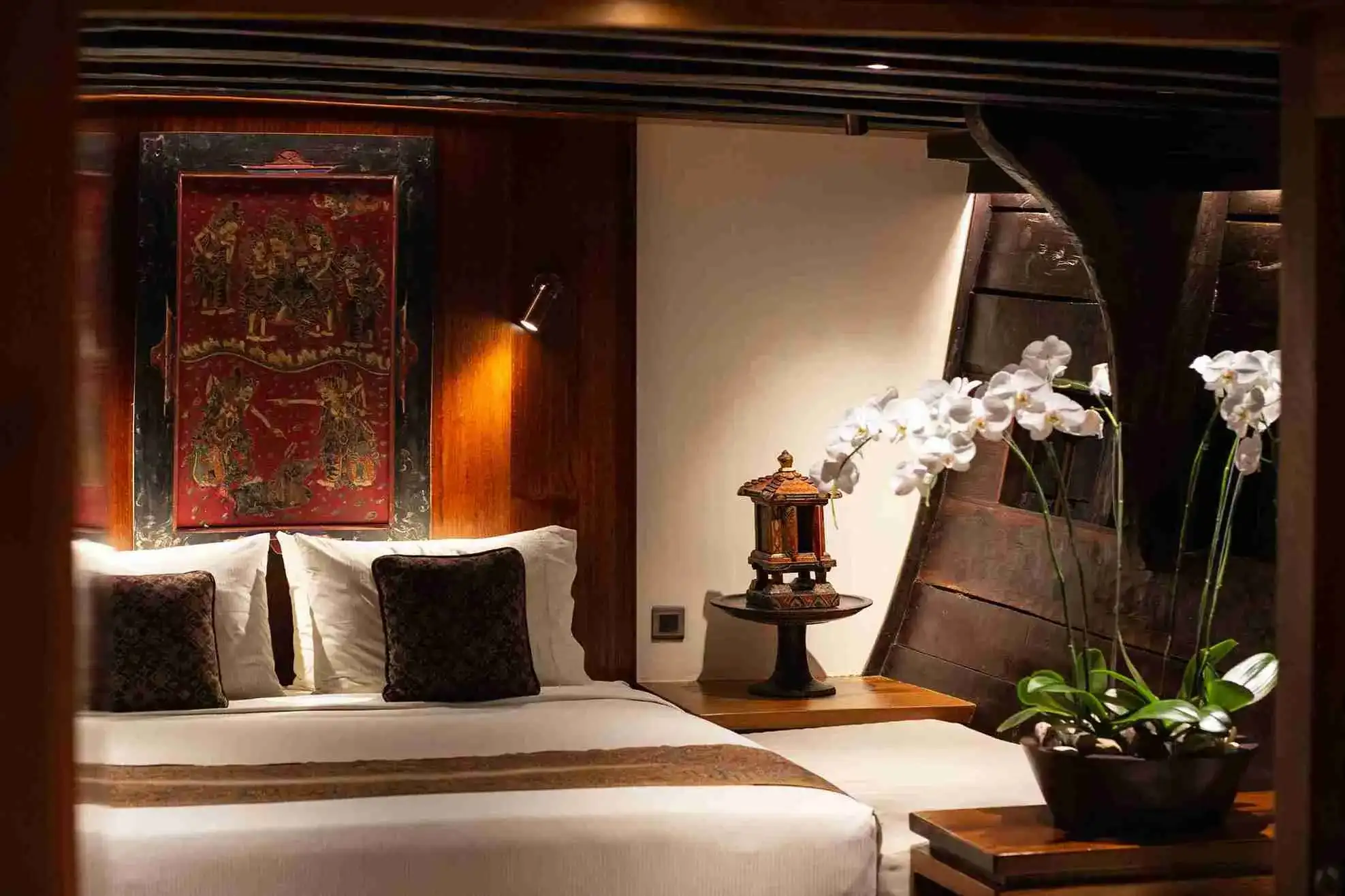
- Hand-fitted teak as the base layer — scribed to the hull’s compound curves, finished matte rather than gloss, letting grain do the visual work. The craft tradition behind it is covered in our anatomy guide.
- Woven and natural textures — rattan, seagrass and linen against the timber, referencing the archipelago without lapsing into resort cliché.
- Deliberate light — layered warm LED schemes engineered for evenings at anchor, and cabin windows enlarged in refit to pull the seascape inside.
- Climate honesty — ventilation and insulation engineering hidden behind the aesthetics, because a beautiful cabin that runs warm in the Flores Sea is a failed cabin.
Studio Work vs Yard Work
The operational reality behind the photographs is a partnership: design studios produce the concept, millwork drawings and material schedules; specialist joinery teams — often drawn from the same South Sulawesi communities that build the hulls — execute them over months of on-board fitting. The best results come when the studio is engaged before the deckhouse is framed, so sightlines, services and furniture are designed together. Retrofit projects can reach the same standard, but the sequencing discipline matters: an interior refit on a 35-metre boat runs USD 100,000 to 400,000 depending on scope, and the difference between a planned refit and an improvised one shows in every joint.
What Interior Provenance Does at Resale
Named-studio interiors now behave like named-yard hulls: they anchor the listing narrative, justify the upper half of the price band and photograph the boat into shortlists she would otherwise miss. A documented interior — designer, drawings, material schedule, refit invoices — also de-risks the buyer’s survey, because the joinery’s hidden side (ventilation, wiring routes, access panels) was engineered rather than improvised. When we value a vessel with a professional interior against her sister with an owner-decorated one, the spread routinely reaches ten percent of hull value. It is one more instance of the market’s ruling principle: documentation converts beauty into price, as the 12-point standard formalises.
Seeing the Standard Afloat
The fastest education in phinisi interiors is walking three of them in a week. Charter guests aboard the leading Komodo fleet experience the studio standard directly — Komodo Luxury operates several of the most photographed vessels in the archipelago — and prospective buyers can arrange viewing itineraries through our fleet page that put two or three interior philosophies side by side in the same waters. Owners planning a purchase-and-refit path should time studio engagement for the survey stage, so the refit plan and the purchase negotiation inform each other.
Briefing a Studio: What Owners Get Right
The owners whose interiors end up photographed share a briefing discipline worth copying. They brief use before aesthetics: how many guests, how many crew, which itineraries, how many weeks of owner use — because a Komodo dive-charter interior and a private family interior make opposite decisions about the same square metres. They fix the material palette to the maintenance reality of the tropics, accepting the studio’s guidance on which finishes survive salt air and charter turnover rather than importing residential tastes that will not. They insist on engineering drawings for the invisible layer — ventilation, wiring routes, access panels — and keep those drawings in the vessel’s permanent file, where they become resale documentation. And they resist the urge to maximise cabin count: the most photographed boats consistently trade one cabin for generosity in the saloon and master suite, because charter guests remember space, not headcount. A studio engagement briefed this way typically runs three to five months from concept to millwork drawings — time that repays itself in a build or refit that proceeds without improvisation.
Frequently Asked Questions
How much does a professional phinisi interior cost?
For a 35-metre vessel: USD 100,000–400,000 for a full refit depending on scope, or a comparable allocation within a new build budget. Named-studio work at the top of that range routinely returns its cost at resale.
Can an existing boat be brought up to studio standard?
Yes, with proper sequencing: studio concept and millwork drawings first, then a planned yard period for execution. Improvised rolling refits cost similar money and read as improvised in every joint.
Does interior design really affect resale value?
Measurably. Documented professional interiors anchor the upper half of the price band — the observed spread against owner-decorated sisters reaches ten percent of hull value, and the listing photography advantage compounds it.
Speak With a Phinisi Broker
Current listings, sea-trial scheduling and build-slot availability are handled directly by our brokerage desk through our parent operator Komodo Luxury. Share your length range, budget band in USD and intended use — private, charter business, or both — and we respond with a matched shortlist within one working day.
WhatsApp: +62 811 382 3875 · Email: [email protected]