 Luxury Phinisi Editorial Desk
Updated: August 2026
A luxury phinisi is built from a hierarchy of tropical hardwoods: Bornean ironwood (ulin) for the keel and backbone, teak for decks and joinery, and bangkirai or kayu besi for frames and planking. The craftsmanship premium is real — master shipwrights shape every timber by hand and eye, and that hand-built integrity is what a buyer is paying for.
The Backbone: Ironwood Below the Waterline
Everything in a phinisi hangs from the keel, and the keel is ulin — Bornean ironwood, a timber so dense it barely floats and so durable that keels from ships launched decades ago remain sound today. Ulin resists marine borers and rot in ways no treatment can replicate, which is why surveyors begin every inspection by sounding the keel along its full length. Sourcing legal, properly seasoned ulin in the required dimensions is now one of the longest lead-time items in any new build — a single flagship keel can take months to source — and it is a meaningful part of why genuine builds cost what they cost. The heritage behind these methods is traced in our phinisi history page.
Frames, Planking and the Grown-Curve Advantage
Traditional Sulawesi builders select frame timbers whose natural grain follows the curve the hull requires — grown curves rather than sawn ones — because timber bent against its grain fights the ship for the rest of her life. Bangkirai and other dense hardwoods form the frames and planking, fastened with bronze or isolated stainless in quality builds. This selection process cannot be rushed and cannot be delegated to a sawmill; it is the accumulated judgement of master shipwrights in Bira and Tana Beru, passed down within families. UNESCO recognised this boatbuilding tradition precisely because the knowledge lives in people, not drawings — the full story is on our phinisi boat building page.
Teak: Where the Luxury Becomes Visible
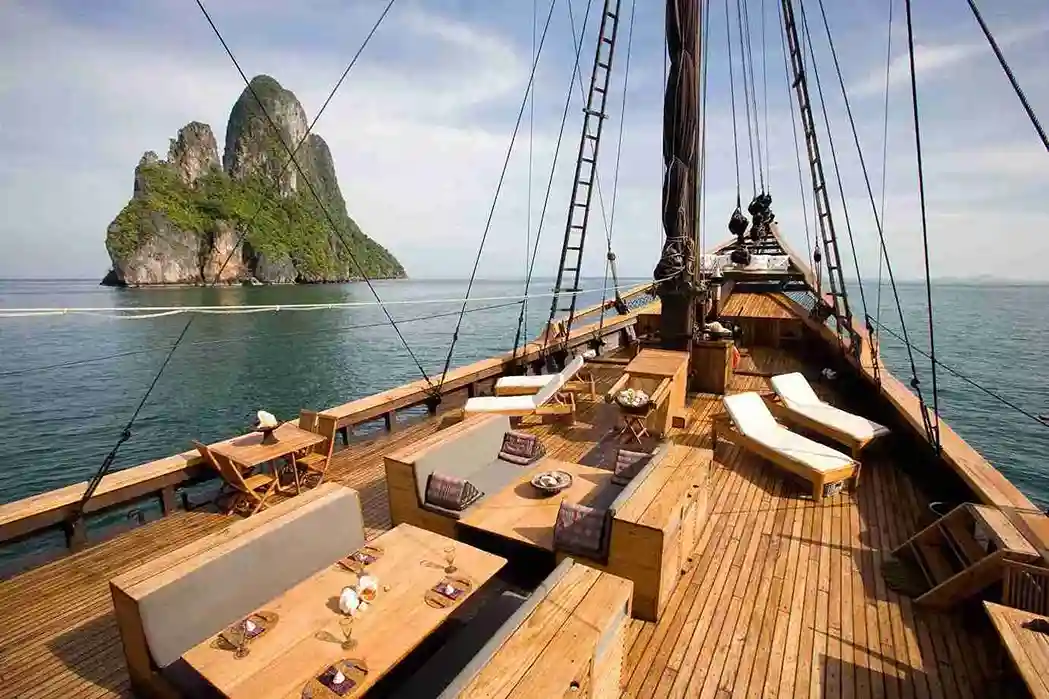
Above the waterline, teak takes over: laid decks, cap rails, deckhouses and the interior joinery that defines the guest experience. Teak earns its position through oil content — it weathers to silver on deck, grips bare feet wet or dry, and machines to furniture-grade finish below. In a luxury-grade interior you will find solid teak or thick-veneer joinery, properly ventilated against the tropics, hand-fitted around the hull’s compound curves. No two phinisi interiors are identical because no two hulls are identical; every cabinet is scribed to its ship. The studios doing this work at the highest level are profiled in The Interior Studios Behind Indonesia’s Most Photographed Phinisi.
What the Craftsmanship Premium Actually Buys
- Longevity. A properly built ironwood-and-teak phinisi, maintained on schedule, has a working life measured in decades — and holds value accordingly.
- Repairability. Every component was shaped by hand and can be reshaped by hand. There is no discontinued part on a wooden ship.
- Motion and quiet. Massive hardwood construction gives phinisi their characteristic soft motion at anchor and under way — a comfort quality charter guests feel immediately.
- Provenance. Named yards and named master builders are tracked by the market. Boats from respected sheds command measurably stronger resale, which is why build provenance is documented in every file on our curated listings.
Reading Materials in a Sale Listing
When a listing names its timbers, verify rather than admire. Ask for the timber origin documentation, look for the fastening schedule, and have the surveyor confirm species at the keel — painted hardwood all looks alike. The difference between an ulin keel and a substituted softer timber is the difference between a 40-year ship and a 15-year problem, and it is exactly the kind of detail a vetted brokerage checks before listing. Buyers commissioning new construction can see current build standards through Komodo Luxury’s boat services, which supervises builds at the source yards in South Sulawesi.
Caring for the Materials You Bought
Ownership of a hardwood ship is stewardship of her materials, and the routines are specific. Teak decks want fresh water and soft brushing across the grain — aggressive cleaning strips the soft grain and ages a deck a decade in an afternoon. Brightwork holds its depth with light, frequent recoating rather than periodic heroic restorations. Below the waterline, the annual haul-out is where ironwood earns its reputation: seams inspected and payed as needed, anodes replaced, sheathing checked along the waterline where sun and sea meet. Inside, the enemy is trapped humidity — cabins ventilated daily and joinery inspected around air-conditioning condensate lines, where quiet drips do slow damage. None of this is burdensome aboard a crewed vessel; it is simply the working rhythm of a professional crew, and it is precisely what surveyors read when they assess a boat. A five-year-old phinisi maintained in this rhythm presents younger than a two-year-old boat that skipped it — and the resale market prices exactly that difference.
Frequently Asked Questions
What wood is a phinisi keel made from?
Bornean ironwood — ulin — or equivalent-density hardwood. It is nearly immune to marine borers and rot, which is why surveyors sound the keel first and why substituted softer timber is a walk-away finding.
Why do luxury phinisi cost more than fibreglass yachts of similar size?
You are paying for months of master-shipwright labour, long-lead legal hardwood sourcing and a hand-fitted interior. In return you get a vessel with decades of working life, full repairability and resale provenance.
How much maintenance does a hardwood hull need?
Annual haul-out with seam and sheathing inspection, recaulking sections as needed, and continuous deck and brightwork care. Budget roughly 8–10 percent of vessel value annually for full maintenance including crew.
Does teak on deck mean the boat is luxury grade?
Not by itself. Teak decking is standard even on mid-market boats; luxury grade is determined by the full 12-point standard — structure, systems, joinery quality and documentation together.
Speak With a Phinisi Broker
Current listings, sea-trial scheduling and build-slot availability are handled directly by our brokerage desk through our parent operator Komodo Luxury. Share your length range, budget band in USD and intended use — private, charter business, or both — and we respond with a matched shortlist within one working day.
WhatsApp: +62 811 382 3875 · Email: [email protected]